Remote SAMsing: From Segment Anything to Segment Everything
📰 ArXiv cs.AI
Learn how Remote SAMsing improves zero-shot segmentation on large remote sensing scenes by addressing quality-coverage trade-offs and object fragmentation
Action Steps
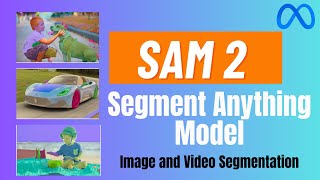
- Apply SAM2 to natural images to understand its limitations
- Implement Remote SAMsing to address quality-coverage trade-offs and object fragmentation
- Tile large remote sensing images and apply Remote SAMsing to each tile
- Configure mask generator thresholds to balance quality and coverage
- Test Remote SAMsing on various remote sensing datasets to evaluate its performance
Who Needs to Know This
Computer vision engineers and researchers working on remote sensing applications can benefit from this technique to improve image segmentation quality and efficiency
Key Insight
💡 Remote SAMsing overcomes the limitations of SAM2 by addressing quality-coverage trade-offs and object fragmentation, enabling high-quality segmentation on large remote sensing images
Share This
🚀 Improve zero-shot segmentation on large remote sensing scenes with Remote SAMsing! 🌐
Key Takeaways
Learn how Remote SAMsing improves zero-shot segmentation on large remote sensing scenes by addressing quality-coverage trade-offs and object fragmentation
Full Article
Title: Remote SAMsing: From Segment Anything to Segment Everything
Abstract:
arXiv:2605.00256v1 Announce Type: cross Abstract: SAM2 produces high-quality zero-shot segmentation on natural images, but applying it to large remote sensing scenes exposes two problems: (1) its mask generator faces an inherent quality-coverage trade-off: strict thresholds yield precise masks but leave most of the image unsegmented, while relaxed thresholds increase coverage at the cost of mask quality; and (2) large images must be tiled, fragmenting objects across tile boundaries. We propose R
Abstract:
arXiv:2605.00256v1 Announce Type: cross Abstract: SAM2 produces high-quality zero-shot segmentation on natural images, but applying it to large remote sensing scenes exposes two problems: (1) its mask generator faces an inherent quality-coverage trade-off: strict thresholds yield precise masks but leave most of the image unsegmented, while relaxed thresholds increase coverage at the cost of mask quality; and (2) large images must be tiled, fragmenting objects across tile boundaries. We propose R


 DeepCamp AI