OpenAI Scholars 2018: Final projects
📰 OpenAI News
OpenAI Scholars 2018 program concludes with final projects from eight scholars, showcasing their machine learning work
Action Steps
- Review the final projects presented by the OpenAI Scholars
- Explore the use of language modeling techniques for music generation
- Investigate the application of reinforcement learning in multi-agent game environments
Who Needs to Know This
Machine learning engineers, data scientists, and software developers can benefit from understanding the applications and projects developed by the OpenAI Scholars, and how they can be used to improve their own work
Key Insight
💡 Experienced software developers can quickly become machine learning practitioners with the right training and resources
Share This
🎵 OpenAI Scholars 2018 generate classical music using language modeling techniques! #AI #MusicGeneration
Key Takeaways
OpenAI Scholars 2018 program concludes with final projects from eight scholars, showcasing their machine learning work
Full Article
# OpenAI Scholars 2018: Final projects | OpenAI
[Skip to main content](https://openai.com/index/openai-scholars-2018-final-projects#main)
[](https://openai.com/)
* [Research](https://openai.com/research/index/)
* Products
* [Business](https://openai.com/business/)
* [Developers](https://openai.com/api/)
* [Company](https://openai.com/about/)
* [Foundation(opens in a new window)](https://openaifoundation.org/)
Log in[Try ChatGPT(opens in a new window)](https://chatgpt.com/?openaicom-did=6d287599-8ee6-4564-b474-a15019e47f87&openaicom_referred=true)
* Research
* Products
* Business
* Developers
* Company
* [Foundation(opens in a new window)](https://openaifoundation.org/)
OpenAI Scholars 2018: Final projects | OpenAI
Table of contents
* [Final projects](https://openai.com/index/openai-scholars-2018-final-projects#final-projects)
* [Scholars Demo Day](https://openai.com/index/openai-scholars-2018-final-projects#scholars-demo-day)
September 10, 2018
[Company](https://openai.com/news/company-announcements/)
# OpenAI Scholars 2018: Final projects
Our first cohort of OpenAI Scholars has now completed the program.
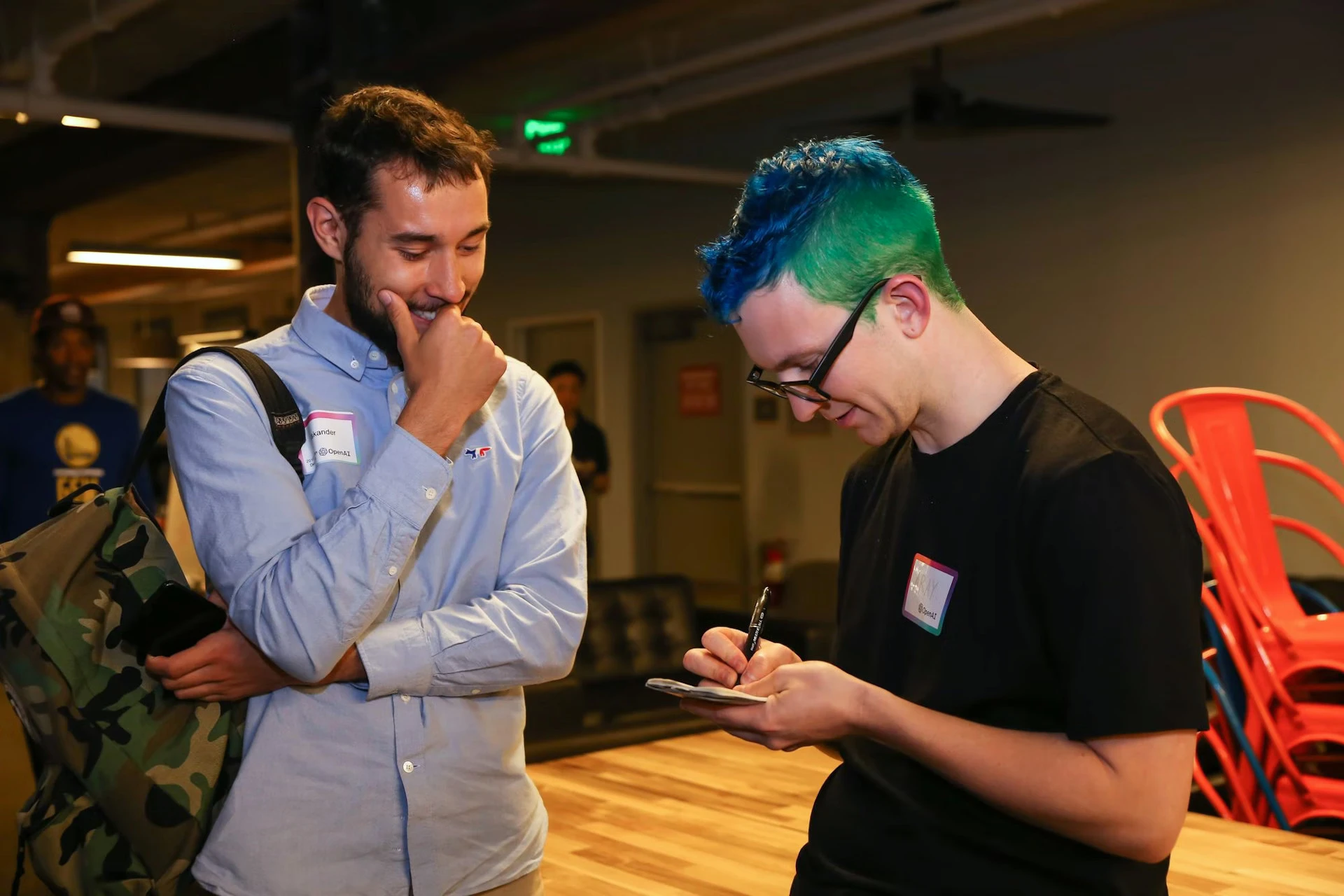
Photo: Blake Tucker
Listen to article
Share
Our first cohort of[OpenAI Scholars(opens in a new window)](https://blog.openai.com/openai-scholars/)has now completed the program. Over the past three months, we’ve seen how quickly experienced software developers can become machine learning practitioners.[All eight Scholars(opens in a new window)](https://blog.openai.com/openai-scholars-class-2018/)produced an exciting final project and are going on to work or teach within machine learning.
We’ll be hosting a[Scholars Demo Day](https://openai.com/index/openai-scholars-2018-final-projects/#demoday)at OpenAI to showcase their work. Our Scholars will talk about their work this summer, followed by Q&A, mingling, and refreshments with the Scholars and other OpenAI folks. This event is open to all who are interested—just RSVP at the link below!
* [RSVP for Demo Day(opens in a new window)](https://docs.google.com/forms/d/1ZdK7Q6xPQ-5j5FDIW1X0jHVa_stpZ-q3uTpU_ecpUTg/edit)
We plan to repeat the Scholars program in 2019. The program is open to people from groups underrepresented in the field, and we think that AI will only benefit everyone if the field has better representation. We’ll also release a case study on the first cohort in upcoming months to help other organizations roll out similar initiatives at their own companies.
## Final projects
# Christine Payne
### Mentor: [Karthik Narasimhan](http://people.csail.mit.edu/karthikn/)
### Works from: San Francisco, CA
### Social links for Christine Payne
* Twitter:[@mcleavey](http://www.twitter.com/mcleavey)
[](http://www.christinemcleavey.com/)
Interesting learning:“This summer I had a basic introduction to RL, and I learned how to use Tensorflow within the Unity game engine to create a multi-agent soccer game. I also learned a lot about language modeling (through my music generation project). I feel much more fluent in PyTorch and TensorFlow than I did at the start of the summer.”
Final project:Adapted current language modeling techniques to model classical music via two different approaches (notewise and chordwise) with parallel character and word level language models. This lets you generate solo piano music or piano and violin chamber music. You also have the option of training the generative model on a large music database or only on specific composers or styles. This project also incorporates a music critic network which scores whether a music sample is real or fake, and anothe
[Skip to main content](https://openai.com/index/openai-scholars-2018-final-projects#main)
[](https://openai.com/)
* [Research](https://openai.com/research/index/)
* Products
* [Business](https://openai.com/business/)
* [Developers](https://openai.com/api/)
* [Company](https://openai.com/about/)
* [Foundation(opens in a new window)](https://openaifoundation.org/)
Log in[Try ChatGPT(opens in a new window)](https://chatgpt.com/?openaicom-did=6d287599-8ee6-4564-b474-a15019e47f87&openaicom_referred=true)
* Research
* Products
* Business
* Developers
* Company
* [Foundation(opens in a new window)](https://openaifoundation.org/)
OpenAI Scholars 2018: Final projects | OpenAI
Table of contents
* [Final projects](https://openai.com/index/openai-scholars-2018-final-projects#final-projects)
* [Scholars Demo Day](https://openai.com/index/openai-scholars-2018-final-projects#scholars-demo-day)
September 10, 2018
[Company](https://openai.com/news/company-announcements/)
# OpenAI Scholars 2018: Final projects
Our first cohort of OpenAI Scholars has now completed the program.

Photo: Blake Tucker
Listen to article
Share
Our first cohort of[OpenAI Scholars(opens in a new window)](https://blog.openai.com/openai-scholars/)has now completed the program. Over the past three months, we’ve seen how quickly experienced software developers can become machine learning practitioners.[All eight Scholars(opens in a new window)](https://blog.openai.com/openai-scholars-class-2018/)produced an exciting final project and are going on to work or teach within machine learning.
We’ll be hosting a[Scholars Demo Day](https://openai.com/index/openai-scholars-2018-final-projects/#demoday)at OpenAI to showcase their work. Our Scholars will talk about their work this summer, followed by Q&A, mingling, and refreshments with the Scholars and other OpenAI folks. This event is open to all who are interested—just RSVP at the link below!
* [RSVP for Demo Day(opens in a new window)](https://docs.google.com/forms/d/1ZdK7Q6xPQ-5j5FDIW1X0jHVa_stpZ-q3uTpU_ecpUTg/edit)
We plan to repeat the Scholars program in 2019. The program is open to people from groups underrepresented in the field, and we think that AI will only benefit everyone if the field has better representation. We’ll also release a case study on the first cohort in upcoming months to help other organizations roll out similar initiatives at their own companies.
## Final projects
# Christine Payne
### Mentor: [Karthik Narasimhan](http://people.csail.mit.edu/karthikn/)
### Works from: San Francisco, CA
### Social links for Christine Payne
* Twitter:[@mcleavey](http://www.twitter.com/mcleavey)
[](http://www.christinemcleavey.com/)
Interesting learning:“This summer I had a basic introduction to RL, and I learned how to use Tensorflow within the Unity game engine to create a multi-agent soccer game. I also learned a lot about language modeling (through my music generation project). I feel much more fluent in PyTorch and TensorFlow than I did at the start of the summer.”
Final project:Adapted current language modeling techniques to model classical music via two different approaches (notewise and chordwise) with parallel character and word level language models. This lets you generate solo piano music or piano and violin chamber music. You also have the option of training the generative model on a large music database or only on specific composers or styles. This project also incorporates a music critic network which scores whether a music sample is real or fake, and anothe




 DeepCamp AI