NumPy 101: A Data Scientist’s Guide to Vectorization, Numerical Computing, and Production…

📰 Medium · Python

Learn NumPy for efficient numerical computing and vectorization to speed up your data science workflows and improve productivity

beginner Published 1 Jun 2026
Action Steps
  1. Import NumPy library using Python
  2. Build arrays and vectors to represent data
  3. Apply vectorized operations to perform calculations
  4. Configure data types for optimal performance
  5. Test and optimize code for production environments
Who Needs to Know This

Data scientists and analysts benefit from using NumPy to optimize their code and collaborate more effectively with their teams

Key Insight

💡 NumPy's vectorization can significantly improve the performance of numerical computations in Python

Share This
💡 Speed up your data science workflows with NumPy's vectorization and numerical computing capabilities
Read full article → ← Back to Reads

Related Videos

Dropout in Deep Learning
AnuTech-CH
Reinforcement Learning : Agent, Environment, Action, Reward, Policy Simply Explained
codehubgenius
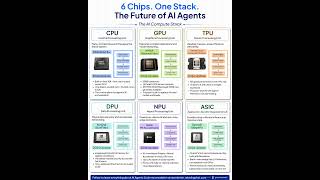
6 AI Chips Explained | CPU vs GPU vs TPU vs NPU
Rakesh Gohel
1. Overview of Artificial Intelligence | What is AI? Fundamental Concepts  & Complete History of AI
1. Overview of Artificial Intelligence | What is AI? Fundamental Concepts & Complete History of AI
Professor Rahul Jain
2. Artificial Intelligence (AI) Explained | AI Problems, AI Techniques & Real-World Applications
Professor Rahul Jain
4. Problem Formulation in AI | Production Systems, Control Strategies & Problem Characteristics
Professor Rahul Jain