Let's build a Production-Grade Bloom Filter in Python
📰 Dev.to · Sarthak Rawat
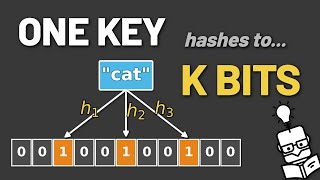
Learn to build a production-grade Bloom filter in Python to enable fast and efficient membership testing in large datasets
Action Steps
- Implement a basic Bloom filter using Python's built-in hash functions and bit arrays
- Configure the optimal size of the bit array and the number of hash functions for your specific use case
- Test the Bloom filter with a large dataset to measure its performance and accuracy
- Apply the Bloom filter to a real-world problem, such as membership testing in a database
- Compare the performance of the Bloom filter with other membership testing algorithms, such as hash tables or sets
Who Needs to Know This
Developers and data engineers can benefit from this technique to improve the performance of their applications, especially when dealing with large amounts of data
Key Insight
💡 Bloom filters can provide fast and efficient membership testing with a low false positive rate, making them ideal for large-scale applications
Share This
🚀 Build a production-grade Bloom filter in Python to enable fast membership testing in large datasets 💻
Key Takeaways
Learn to build a production-grade Bloom filter in Python to enable fast and efficient membership testing in large datasets
Full Article
Ever wondered how databases can tell you "this username is definitely not taken" in milliseconds...





 DeepCamp AI