Availability ≠ Reliability ≠ Durability ≠ Resilience
📰 Medium · DevOps
Distinguish between availability, reliability, durability, and resilience in system design to improve incident response and engineering decisions
Action Steps
- Define availability as the percentage of time a system is operational
- Measure reliability as the probability of a system functioning correctly over time
- Assess durability as the ability of a system to withstand failures without data loss
- Evaluate resilience as the capacity of a system to recover quickly from incidents
Who Needs to Know This
DevOps teams and system engineers can benefit from understanding these concepts to optimize system performance and minimize downtime
Key Insight
💡 Availability, reliability, durability, and resilience are distinct concepts that require separate metrics and engineering approaches
Share This
🚨 Understand the difference between availability, reliability, durability, and resilience to improve system design and incident response 🚨
Key Takeaways
Distinguish between availability, reliability, durability, and resilience in system design to improve incident response and engineering decisions
Full Article
Title: Availability ≠ Reliability ≠ Durability ≠ Resilience
URL Source: https://medium.com/@kannavkunal/availability-reliability-durability-resilience-ef91121d1349?source=rss------devops-5
Published Time: 2026-05-07T21:07:49Z
Markdown Content:
# Availability ≠ Reliability ≠ Durability ≠ Resilience | by Kunal Kannav | May, 2026 | Medium
[Sitemap](https://medium.com/sitemap/sitemap.xml)
[Open in app](https://play.google.com/store/apps/details?id=com.medium.reader&referrer=utm_source%3DmobileNavBar&source=post_page---top_nav_layout_nav-----------------------------------------)
Sign up
[Sign in](https://medium.com/m/signin?operation=login&redirect=https%3A%2F%2Fmedium.com%2F%40kannavkunal%2Favailability-reliability-durability-resilience-ef91121d1349&source=post_page---top_nav_layout_nav-----------------------global_nav------------------)
[](https://medium.com/?source=post_page---top_nav_layout_nav-----------------------------------------)
Get app
[Write](https://medium.com/m/signin?operation=register&redirect=https%3A%2F%2Fmedium.com%2Fnew-story&source=---top_nav_layout_nav-----------------------new_post_topnav------------------)
[Search](https://medium.com/search?source=post_page---top_nav_layout_nav-----------------------------------------)
Sign up
[Sign in](https://medium.com/m/signin?operation=login&redirect=https%3A%2F%2Fmedium.com%2F%40kannavkunal%2Favailability-reliability-durability-resilience-ef91121d1349&source=post_page---top_nav_layout_nav-----------------------global_nav------------------)

# Availability ≠ Reliability ≠ Durability ≠ Resilience
[](https://medium.com/@kannavkunal?source=post_page---byline--ef91121d1349---------------------------------------)
[Kunal Kannav](https://medium.com/@kannavkunal?source=post_page---byline--ef91121d1349---------------------------------------)
Follow
6 min read
·
Just now
[](https://medium.com/m/signin?actionUrl=https%3A%2F%2Fmedium.com%2F_%2Fvote%2Fp%2Fef91121d1349&operation=register&redirect=https%3A%2F%2Fmedium.com%2F%40kannavkunal%2Favailability-reliability-durability-resilience-ef91121d1349&user=Kunal+Kannav&userId=38f60f27d7e2&source=---header_actions--ef91121d1349---------------------clap_footer------------------)
[](https://medium.com/m/signin?actionUrl=https%3A%2F%2Fmedium.com%2F_%2Fbookmark%2Fp%2Fef91121d1349&operation=register&redirect=https%3A%2F%2Fmedium.com%2F%40kannavkunal%2Favailability-reliability-durability-resilience-ef91121d1349&source=---header_actions--ef91121d1349---------------------bookmark_footer------------------)
[Listen](https://medium.com/m/signin?actionUrl=https%3A%2F%2Fmedium.com%2Fplans%3Fdimension%3Dpost_audio_button%26postId%3Def91121d1349&operation=register&redirect=https%3A%2F%2Fmedium.com%2F%40kannavkunal%2Favailability-reliability-durability-resilience-ef91121d1349&source=---header_actions--ef91121d1349---------------------post_audio_button------------------)
Share
Press enter or click to view image in full size
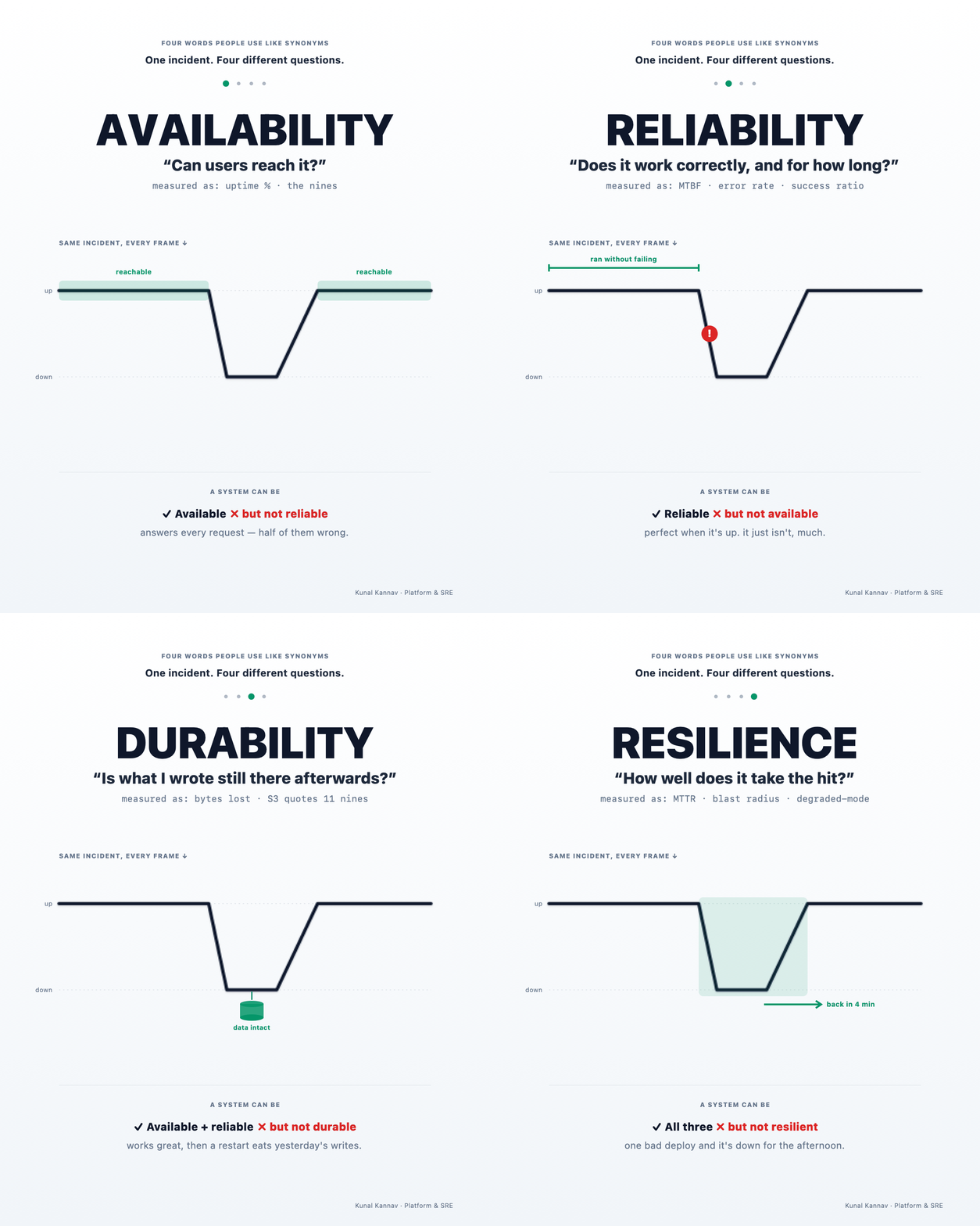
There’s a sentence that shows up in a lot of postmortems, and it goes something like: _“the service was unavailable, which impacted reliability, but the system was resilient and no data was lost.”_
That sentence uses four different words to gesture at one vague idea: things were bad, then they weren’t. Which is fine for the exec summary. It’s not fine for the part where you decide what to actually fix, because each of those four words is a different question, a different metric, and a completely different engineering bill.
Here’s the cleanest way I’ve found to keep them straight: take **one incident** and ask **four questions** about it.
## The incident
Pick any outage you like. For this post: a service that’s healthy, drops hard for a few minute
URL Source: https://medium.com/@kannavkunal/availability-reliability-durability-resilience-ef91121d1349?source=rss------devops-5
Published Time: 2026-05-07T21:07:49Z
Markdown Content:
# Availability ≠ Reliability ≠ Durability ≠ Resilience | by Kunal Kannav | May, 2026 | Medium
[Sitemap](https://medium.com/sitemap/sitemap.xml)
[Open in app](https://play.google.com/store/apps/details?id=com.medium.reader&referrer=utm_source%3DmobileNavBar&source=post_page---top_nav_layout_nav-----------------------------------------)
Sign up
[Sign in](https://medium.com/m/signin?operation=login&redirect=https%3A%2F%2Fmedium.com%2F%40kannavkunal%2Favailability-reliability-durability-resilience-ef91121d1349&source=post_page---top_nav_layout_nav-----------------------global_nav------------------)
[](https://medium.com/?source=post_page---top_nav_layout_nav-----------------------------------------)
Get app
[Write](https://medium.com/m/signin?operation=register&redirect=https%3A%2F%2Fmedium.com%2Fnew-story&source=---top_nav_layout_nav-----------------------new_post_topnav------------------)
[Search](https://medium.com/search?source=post_page---top_nav_layout_nav-----------------------------------------)
Sign up
[Sign in](https://medium.com/m/signin?operation=login&redirect=https%3A%2F%2Fmedium.com%2F%40kannavkunal%2Favailability-reliability-durability-resilience-ef91121d1349&source=post_page---top_nav_layout_nav-----------------------global_nav------------------)

# Availability ≠ Reliability ≠ Durability ≠ Resilience
[](https://medium.com/@kannavkunal?source=post_page---byline--ef91121d1349---------------------------------------)
[Kunal Kannav](https://medium.com/@kannavkunal?source=post_page---byline--ef91121d1349---------------------------------------)
Follow
6 min read
·
Just now
[](https://medium.com/m/signin?actionUrl=https%3A%2F%2Fmedium.com%2F_%2Fvote%2Fp%2Fef91121d1349&operation=register&redirect=https%3A%2F%2Fmedium.com%2F%40kannavkunal%2Favailability-reliability-durability-resilience-ef91121d1349&user=Kunal+Kannav&userId=38f60f27d7e2&source=---header_actions--ef91121d1349---------------------clap_footer------------------)
[](https://medium.com/m/signin?actionUrl=https%3A%2F%2Fmedium.com%2F_%2Fbookmark%2Fp%2Fef91121d1349&operation=register&redirect=https%3A%2F%2Fmedium.com%2F%40kannavkunal%2Favailability-reliability-durability-resilience-ef91121d1349&source=---header_actions--ef91121d1349---------------------bookmark_footer------------------)
[Listen](https://medium.com/m/signin?actionUrl=https%3A%2F%2Fmedium.com%2Fplans%3Fdimension%3Dpost_audio_button%26postId%3Def91121d1349&operation=register&redirect=https%3A%2F%2Fmedium.com%2F%40kannavkunal%2Favailability-reliability-durability-resilience-ef91121d1349&source=---header_actions--ef91121d1349---------------------post_audio_button------------------)
Share
Press enter or click to view image in full size

There’s a sentence that shows up in a lot of postmortems, and it goes something like: _“the service was unavailable, which impacted reliability, but the system was resilient and no data was lost.”_
That sentence uses four different words to gesture at one vague idea: things were bad, then they weren’t. Which is fine for the exec summary. It’s not fine for the part where you decide what to actually fix, because each of those four words is a different question, a different metric, and a completely different engineering bill.
Here’s the cleanest way I’ve found to keep them straight: take **one incident** and ask **four questions** about it.
## The incident
Pick any outage you like. For this post: a service that’s healthy, drops hard for a few minute
 DeepCamp AI