Angular Signals + Standalone — The Future Architecture Pattern
📰 Medium · JavaScript
Learn how Angular Signals and Standalone Components are revolutionizing the framework's architecture, making it more reactive and efficient
Action Steps
- Explore the concept of Signals in Angular and how they replace traditional RxJS-heavy logic
- Learn about Standalone Components and their role in simplifying Angular architecture
- Create a new Angular project using the latest version to experiment with Signals and Standalone Components
- Refactor an existing Angular project to use Signals and Standalone Components, reducing boilerplate code and complexity
- Evaluate the performance and maintainability benefits of using Signals and Standalone Components in your Angular applications
Who Needs to Know This
Frontend developers and software engineers working with Angular can benefit from understanding this new architecture pattern to improve their application's performance and maintainability
Key Insight
💡 Angular Signals and Standalone Components represent a paradigm shift in Angular architecture, enabling more reactive and efficient applications
Share This
🚀 Angular Signals + Standalone Components are changing the game! Say goodbye to boilerplate code and complexity 🚫
Key Takeaways
Learn how Angular Signals and Standalone Components are revolutionizing the framework's architecture, making it more reactive and efficient
Full Article
Title: Angular Signals + Standalone — The Future Architecture Pattern
URL Source: https://medium.com/@dipaksahirav/angular-signals-standalone-the-future-architecture-pattern-cdac284ae434?source=rss------javascript-5
Published Time: 2026-04-17T00:53:12Z
Markdown Content:
# Angular Signals + Standalone — The Future Architecture Pattern | by Dipak Ahirav | Apr, 2026 | Medium
[Sitemap](https://medium.com/sitemap/sitemap.xml)
[Open in app](https://play.google.com/store/apps/details?id=com.medium.reader&referrer=utm_source%3DmobileNavBar&source=post_page---top_nav_layout_nav-----------------------------------------)
Sign up
[Sign in](https://medium.com/m/signin?operation=login&redirect=https%3A%2F%2Fmedium.com%2F%40dipaksahirav%2Fangular-signals-standalone-the-future-architecture-pattern-cdac284ae434&source=post_page---top_nav_layout_nav-----------------------global_nav------------------)
[](https://medium.com/?source=post_page---top_nav_layout_nav-----------------------------------------)
Get app
[Write](https://medium.com/m/signin?operation=register&redirect=https%3A%2F%2Fmedium.com%2Fnew-story&source=---top_nav_layout_nav-----------------------new_post_topnav------------------)
[Search](https://medium.com/search?source=post_page---top_nav_layout_nav-----------------------------------------)
Sign up
[Sign in](https://medium.com/m/signin?operation=login&redirect=https%3A%2F%2Fmedium.com%2F%40dipaksahirav%2Fangular-signals-standalone-the-future-architecture-pattern-cdac284ae434&source=post_page---top_nav_layout_nav-----------------------global_nav------------------)

[Mastodon](https://me.dm/@dipaksahirav)
Member-only story
# Angular Signals + Standalone — The Future Architecture Pattern
## **Angular is no longer just a framework — it’s becoming a reactive system.**
[](https://medium.com/@dipaksahirav?source=post_page---byline--cdac284ae434---------------------------------------)
[Dipak Ahirav](https://medium.com/@dipaksahirav?source=post_page---byline--cdac284ae434---------------------------------------)
Follow
2 min read
·
1 hour ago
[](https://medium.com/m/signin?actionUrl=https%3A%2F%2Fmedium.com%2F_%2Fvote%2Fp%2Fcdac284ae434&operation=register&redirect=https%3A%2F%2Fmedium.com%2F%40dipaksahirav%2Fangular-signals-standalone-the-future-architecture-pattern-cdac284ae434&user=Dipak+Ahirav&userId=101ba426fa09&source=---header_actions--cdac284ae434---------------------clap_footer------------------)
[](https://medium.com/m/signin?actionUrl=https%3A%2F%2Fmedium.com%2F_%2Fbookmark%2Fp%2Fcdac284ae434&operation=register&redirect=https%3A%2F%2Fmedium.com%2F%40dipaksahirav%2Fangular-signals-standalone-the-future-architecture-pattern-cdac284ae434&source=---header_actions--cdac284ae434---------------------bookmark_footer------------------)
[Listen](https://medium.com/m/signin?actionUrl=https%3A%2F%2Fmedium.com%2Fplans%3Fdimension%3Dpost_audio_button%26postId%3Dcdac284ae434&operation=register&redirect=https%3A%2F%2Fmedium.com%2F%40dipaksahirav%2Fangular-signals-standalone-the-future-architecture-pattern-cdac284ae434&source=---header_actions--cdac284ae434---------------------post_audio_button------------------)
Share
Press enter or click to view image in full size
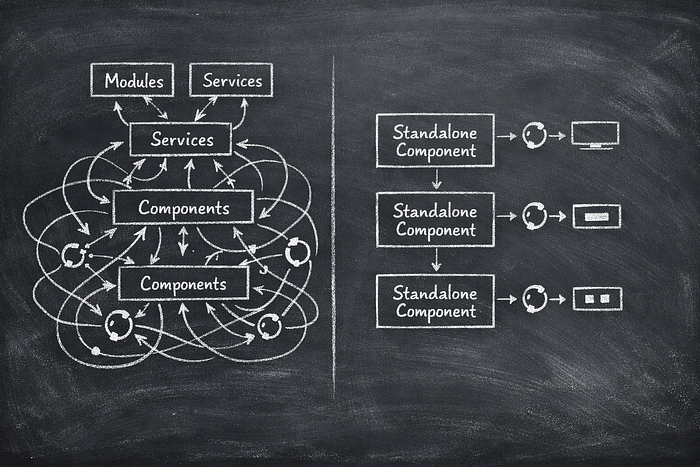
## 📖 The Shift Is Happening
Angular is evolving.
From:
* NgModules
* RxJS-heavy logic
* Complex architecture
To:
👉 **Signals + Standalone Components**
This isn’t just an update.
It’s a **paradigm shift**.
## 🧠 The Old Way (Traditional Angular)
Typical structure:
* Modules manage everything
* RxJS handles reactivity
* Components depend on services
This leads to:
❌ Boilerplate
❌ Complexity
❌ Hard-to-follow flow
## ⚡ The New Way (Modern Angular)
Now Angular is mov
URL Source: https://medium.com/@dipaksahirav/angular-signals-standalone-the-future-architecture-pattern-cdac284ae434?source=rss------javascript-5
Published Time: 2026-04-17T00:53:12Z
Markdown Content:
# Angular Signals + Standalone — The Future Architecture Pattern | by Dipak Ahirav | Apr, 2026 | Medium
[Sitemap](https://medium.com/sitemap/sitemap.xml)
[Open in app](https://play.google.com/store/apps/details?id=com.medium.reader&referrer=utm_source%3DmobileNavBar&source=post_page---top_nav_layout_nav-----------------------------------------)
Sign up
[Sign in](https://medium.com/m/signin?operation=login&redirect=https%3A%2F%2Fmedium.com%2F%40dipaksahirav%2Fangular-signals-standalone-the-future-architecture-pattern-cdac284ae434&source=post_page---top_nav_layout_nav-----------------------global_nav------------------)
[](https://medium.com/?source=post_page---top_nav_layout_nav-----------------------------------------)
Get app
[Write](https://medium.com/m/signin?operation=register&redirect=https%3A%2F%2Fmedium.com%2Fnew-story&source=---top_nav_layout_nav-----------------------new_post_topnav------------------)
[Search](https://medium.com/search?source=post_page---top_nav_layout_nav-----------------------------------------)
Sign up
[Sign in](https://medium.com/m/signin?operation=login&redirect=https%3A%2F%2Fmedium.com%2F%40dipaksahirav%2Fangular-signals-standalone-the-future-architecture-pattern-cdac284ae434&source=post_page---top_nav_layout_nav-----------------------global_nav------------------)

[Mastodon](https://me.dm/@dipaksahirav)
Member-only story
# Angular Signals + Standalone — The Future Architecture Pattern
## **Angular is no longer just a framework — it’s becoming a reactive system.**
[](https://medium.com/@dipaksahirav?source=post_page---byline--cdac284ae434---------------------------------------)
[Dipak Ahirav](https://medium.com/@dipaksahirav?source=post_page---byline--cdac284ae434---------------------------------------)
Follow
2 min read
·
1 hour ago
[](https://medium.com/m/signin?actionUrl=https%3A%2F%2Fmedium.com%2F_%2Fvote%2Fp%2Fcdac284ae434&operation=register&redirect=https%3A%2F%2Fmedium.com%2F%40dipaksahirav%2Fangular-signals-standalone-the-future-architecture-pattern-cdac284ae434&user=Dipak+Ahirav&userId=101ba426fa09&source=---header_actions--cdac284ae434---------------------clap_footer------------------)
[](https://medium.com/m/signin?actionUrl=https%3A%2F%2Fmedium.com%2F_%2Fbookmark%2Fp%2Fcdac284ae434&operation=register&redirect=https%3A%2F%2Fmedium.com%2F%40dipaksahirav%2Fangular-signals-standalone-the-future-architecture-pattern-cdac284ae434&source=---header_actions--cdac284ae434---------------------bookmark_footer------------------)
[Listen](https://medium.com/m/signin?actionUrl=https%3A%2F%2Fmedium.com%2Fplans%3Fdimension%3Dpost_audio_button%26postId%3Dcdac284ae434&operation=register&redirect=https%3A%2F%2Fmedium.com%2F%40dipaksahirav%2Fangular-signals-standalone-the-future-architecture-pattern-cdac284ae434&source=---header_actions--cdac284ae434---------------------post_audio_button------------------)
Share
Press enter or click to view image in full size

## 📖 The Shift Is Happening
Angular is evolving.
From:
* NgModules
* RxJS-heavy logic
* Complex architecture
To:
👉 **Signals + Standalone Components**
This isn’t just an update.
It’s a **paradigm shift**.
## 🧠 The Old Way (Traditional Angular)
Typical structure:
* Modules manage everything
* RxJS handles reactivity
* Components depend on services
This leads to:
❌ Boilerplate
❌ Complexity
❌ Hard-to-follow flow
## ⚡ The New Way (Modern Angular)
Now Angular is mov
 DeepCamp AI